
google doubleclick

ADELAIDE'S TRUSTED LIQUID WASTE REMOVAL EXPERTS FOR OVER 20 YEARS

DEPOTS LOCATED AT LITTLEHAMPTON, WOODSIDE AND PARA HILLS WEST SERVICING ADELAIDE METRO, ADELAIDE NORTHERN AND REGIONAL, ADELAIDE HILLS SEPTIC & SOUTH COAST
contact us envelope icon facebook logo
google reviews logo

Blog

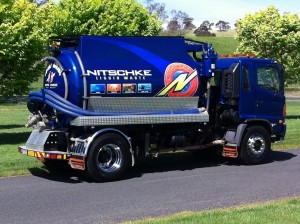
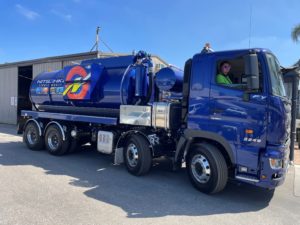
Nitschke Liquid Waste servicing a South Australian commercial trade waste customer
13th July, 2026

Trade Waste Compliance for South Australian Food Businesses: What Every Owner Should Know

Running a successful food business involves far more than preparing great food and delivering excellent customer service. Every restaurant, café, hotel, bakery, winery, food manufacturer and commercial kitchen in South Australia also has a responsibility to manage its trade waste appropriately.

Trade waste compliance isn’t simply an administrative requirement. Proper management helps protect your plumbing, supports the public sewer network and reduces the likelihood of costly disruptions to your business.

Whether you operate a small café or a large food production facility, understanding your obligations and maintaining your liquid waste systems can save time, money and unnecessary stress.

At Nitschke Liquid Waste, we work with businesses throughout South Australia to provide reliable commercial liquid waste services, including grease trap cleaning, interceptor cleaning, oily water disposal, septic tank pump-outs, trade waste collection and emergency spill response.

What Is Trade Waste?

Trade waste is any liquid waste generated by a business that differs from normal domestic wastewater.

For food-related businesses, trade waste commonly includes:

Fats, oils and grease (FOG)
Food particles
Wash water from commercial kitchens
Wastewater from food preparation
Cleaning chemicals used in commercial kitchens
Wastewater from food manufacturing processes

Without proper management, these materials can accumulate in drains and sewer infrastructure, increasing the risk of blockages and operational problems.

Which Businesses Produce Trade Waste?

Many industries produce trade waste every day, including:

Restaurants
Cafés
Hotels
Pubs and clubs
Fast food outlets
Bakeries
Commercial kitchens
Caterers
Food manufacturers
Wineries with restaurants or cellar doors
Breweries
Butchers
Supermarkets with food preparation areas
Hospitals
Aged care facilities
Schools and universities

Even relatively small commercial kitchens can generate significant volumes of fats and grease over time.

Why Grease Traps Are So Important?

Grease traps play a vital role in preventing fats, oils and grease from entering the sewer system.

As wastewater leaves your kitchen, the grease trap separates lighter grease from the water before it continues through the drainage system.

Without regular cleaning, grease traps gradually fill with accumulated waste. Once capacity is reduced, problems can develop quickly, including:

Slow drainage
Blocked pipes
Strong odours
Overflowing grease traps
Emergency plumbing call-outs
Disruption to kitchen operations

Routine grease trap cleaning helps reduce these risks and supports reliable day-to-day operations.

Common Trade Waste Mistakes

Many businesses unintentionally create problems by delaying maintenance or overlooking early warning signs.

Some of the most common issues include:

Waiting until drains become blocked before arranging servicing
Ignoring unpleasant odours around grease traps
Assuming a grease trap never needs cleaning
Pouring excessive fats and oils directly into sinks
Failing to establish a preventative maintenance schedule

These issues can often be avoided through regular servicing and good kitchen practices.

The Benefits of Scheduled Maintenance

A planned maintenance program is generally more efficient than responding only when problems occur.

Regular servicing can help your business:

Reduce emergency call-outs
Minimise kitchen downtime
Improve drainage performance
Extend the life of grease traps and associated infrastructure
Support a cleaner and safer working environment
Better manage liquid waste throughout the year

Many businesses choose scheduled servicing because it provides consistency and allows maintenance to be planned around trading hours where possible.

Beyond Grease Traps: Other Commercial Liquid Waste Services

Trade waste management often involves more than grease trap cleaning alone.

Depending on your operations, you may also require:

Septic Tank Pump-Outs

Businesses operating outside mains sewer networks rely on properly maintained septic systems. Regular pump-outs help keep these systems operating efficiently.

Oily Water Disposal

Workshops, service stations and industrial businesses often generate oily water that requires collection and appropriate disposal.

Wash Bay Waste

Commercial vehicle wash bays can produce wastewater containing sediment, oils and contaminants that should be managed correctly.

Interceptor Cleaning

Oil-water interceptors and other treatment systems require periodic cleaning to maintain effective performance.

Emergency Spill Response

Unexpected spills can occur at any time. Having access to a responsive liquid waste contractor helps businesses manage incidents quickly and minimise operational disruption.

Choosing the Right Liquid Waste Contractor

Selecting an experienced contractor is an important part of maintaining your liquid waste systems.

Look for a provider that offers:

Reliable scheduled servicing
Modern vacuum tanker equipment
Experienced operators
Flexible scheduling for commercial businesses
A strong understanding of South Australian commercial waste requirements
Responsive emergency support when needed

Building an ongoing relationship with a trusted contractor can simplify maintenance and reduce the risk of unexpected problems.

Why Businesses Across South Australia Choose Nitschke Liquid Waste

Nitschke Liquid Waste proudly supports commercial customers across South Australia.

We work with:

Restaurants
Cafés
Hotels
Wineries
Breweries
Food manufacturers
Commercial kitchens
Aged care facilities
Schools
Industrial businesses

Our services include scheduled grease trap cleaning, trade waste collection, interceptor cleaning, septic tank pump-outs, oily water disposal, liquid waste transport and emergency spill response.

Our goal is to provide dependable service that allows our customers to focus on running their businesses with confidence.

Book a Commercial Liquid Waste Service

Trade waste management doesn’t have to be complicated.

By establishing a regular maintenance program and working with an experienced liquid waste contractor, your business can reduce the likelihood of costly disruptions while keeping essential waste systems operating efficiently.

If your business needs professional grease trap cleaning, trade waste collection or other commercial liquid waste services anywhere in South Australia, the team at Nitschke Liquid Waste is here to help.

Contact us today to discuss a customised servicing program tailored to your business.
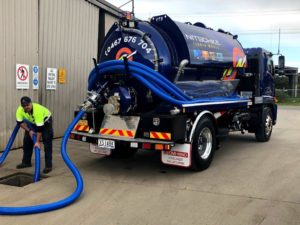
Nitschke Liquid Waste grease trap cleaning service in Adelaide
13th July, 2026

Grease Trap Cleaning in Adelaide: How Often Should Restaurants Service Their Grease Trap?

If you own or manage a restaurant, café, hotel, bakery, club, aged care facility or any commercial kitchen in Adelaide, regular grease trap cleaning isn’t just good practice—it helps keep your business operating efficiently and supports compliance with trade waste requirements.

A neglected grease trap can lead to unpleasant odours, blocked drains, emergency call-outs, kitchen downtime and expensive repairs. Fortunately, these issues are largely preventable with a scheduled maintenance program.

At Nitschke Liquid Waste, we provide professional grease trap cleaning services for businesses throughout Adelaide and South Australia. Our experienced team works with hospitality venues, food manufacturers and commercial kitchens to help minimise disruptions and keep operations running smoothly.

What Is a Grease Trap?

A grease trap, sometimes called a grease arrestor, is installed between your kitchen and the sewer system. It captures fats, oils and grease (often referred to as FOG) before they enter the wastewater network.

Without a properly maintained grease trap, grease can accumulate inside pipework, eventually causing blockages and overflows that may interrupt business operations.

Commercial kitchens generate large volumes of fats and oils every day. Even businesses with good kitchen practices still require routine grease trap servicing to remove the accumulated waste.

Which Businesses Need Grease Trap Cleaning?

Many businesses across South Australia rely on regular grease trap servicing, including:

Restaurants
Cafés
Hotels
Pubs and licensed clubs
Fast food outlets
Bakeries
Commercial kitchens
Catering companies
Food manufacturers
Butchers
Supermarkets with food preparation areas
Hospitals
Aged care facilities
Schools and universities
Wineries with restaurants or commercial kitchens
Breweries

If your business prepares, cooks or serves food, there’s a strong chance that routine grease trap maintenance is an important part of your operations.

How Often Should a Grease Trap Be Cleaned?

There is no single schedule that suits every business. The ideal servicing frequency depends on:

The size of your grease trap
Daily customer numbers
Volume of food prepared
Cooking methods
Amount of fats and oils produced

As a general guide:

Busy restaurants may require servicing every 4–6 weeks.
Medium-sized cafés often benefit from servicing every 6–8 weeks.
Smaller commercial kitchens may only require servicing every 2–3 months.
Food processing facilities and high-volume kitchens may need more frequent maintenance.

The best approach is to establish a preventative maintenance schedule rather than waiting until problems arise.

Signs Your Grease Trap Needs Servicing

Your grease trap may already be due for cleaning if you notice:

Strong odours near sinks or outside the building
Slow-draining sinks
Gurgling sounds from plumbing
Grease overflowing from inspection points
Increased pest activity
Frequent drain blockages
Kitchen staff reporting recurring plumbing issues

Ignoring these warning signs can result in more significant maintenance issues and potentially disrupt day-to-day operations.

What Happens During a Professional Grease Trap Clean?

When Nitschke Liquid Waste services your grease trap, our trained operators complete a thorough clean, which generally includes:

Pumping out the grease trap contents
Removing fats, oils, grease and sludge
Cleaning internal surfaces where appropriate
Inspecting the trap for obvious issues
Transporting the collected liquid waste for appropriate disposal
Leaving the site clean and tidy

Regular servicing helps maximise the effectiveness of your grease trap and supports reliable performance.

Why Preventative Maintenance Saves Money

Many businesses only call for assistance after a blockage or overflow has occurred. Unfortunately, emergency work is often more disruptive and expensive than planned maintenance.

Routine servicing can help:

Reduce emergency plumbing call-outs
> Minimise downtime during busy trading periods
Lower the likelihood of blocked drains
Extend the service life of your grease trap
Support a cleaner, safer kitchen environment

For busy hospitality businesses, avoiding even a single unexpected closure can make scheduled maintenance a worthwhile investment.

Supporting Trade Waste Compliance

Commercial kitchens in South Australia have responsibilities when it comes to managing trade waste.

Maintaining your grease trap is an important part of responsible wastewater management. Regular servicing helps reduce the amount of fats, oils and grease entering the sewer system and supports good environmental practices.

Working with an experienced liquid waste contractor gives your business confidence that grease trap waste is collected and transported appropriately.

Why Choose Nitschke Liquid Waste?

Nitschke Liquid Waste has built a reputation for reliable commercial liquid waste services across South Australia.

Businesses choose us because we offer:

Scheduled grease trap maintenance programs
Prompt and dependable service
Experienced operators
Modern vacuum tanker equipment
Flexible servicing to suit business operations
Support for restaurants, cafés, wineries, food manufacturers and commercial kitchens across South Australia

Whether you operate a single café or manage multiple hospitality venues, we can tailor a servicing schedule to meet your operational needs.

Contact

Waiting until your grease trap causes problems can lead to unnecessary stress, downtime and expense.

A proactive servicing schedule helps keep your kitchen operating efficiently while reducing the risk of blockages and unexpected disruptions.

If you’re looking for professional grease trap cleaning in Adelaide or anywhere in South Australia, Nitschke Liquid Waste is ready to help.

Contact our team today to discuss a customised grease trap maintenance program for your business.

6th August, 2019

SA Water Requirement – The new WasteId System and does Nitschke comply?

SA Water Requirement – The new WasteId System and does Nitschke comply?

ABSOLUTELY! The team here at Nitschke Liquid Waste is dedicated to providing the very best to our customers, and we are committed to ensuring we maintain the highest standard of service in grease trap cleaning and pumping. Our liquid waste operators are now fully trained to comply with this new SA Water requirement.

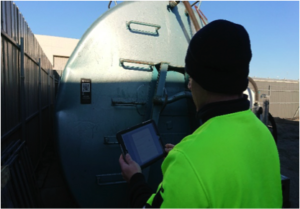
nitschke worker standing at back of pumping truck

We believe that it is important for our customers to understand the new guidelines provided by SA Water, and what it means for you. Basically, this new system means customers will be required to use a licensed hauler to transport their waste to a licensed disposal facility, as and when required by SA Water, to have fewer fat chokes in the sewerage network. The SA Water website has information available at https://www.sawater.com.au/business/trade-and-liquid-hauled-waste/trade-waste/grease-arrestor-maintenance-app regarding the maintenance of your grease trap, and the new QR2id/WasteId system, which can be either viewed online or downloaded.

Most businesses with a pre-treatment grease trap device would have received a letter recently outlining the new system, and how SA Water will be managing this for you. They will essentially be providing you with a notice that your grease trap needs to be cleaned, and give you a set time period to organise this to be done.

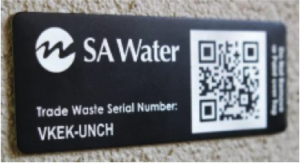
SA Water is responsible for providing the QR2id tags (or barcode) for all pre-treatment grease trap devices (grease trap/arrestors etc) and every one of these devices will be tagged with their unique ID to be monitored under the new system. You, our customer, are responsible for having a registered hauler to provide your service, and we, your registered hauler, are responsible for making sure our vehicles are tagged to accurately record the collection and disposal data.


SA Water is responsible for providing the recommended frequency of service to you. This information is also available via the WasteID app, and that is how often you should be having your grease trap cleaned. We can make the process much easier when it comes to your grease arrestor maintenance by managing the schedule for your grease trap cleaning, and by using the QR2id app to scan the tag. When the tag is scanned, it electronically uploads the confirmation of service into the WasteID program, which is the platform that collects and holds the service information. This confirms to SA Water that the grease trap has been pumped out, and transported by a registered hauler, and then ultimately disposed of at a licensed facility.  This is an extremely important process to make sure everyone is compliant, which results in having a cleaner sewer system in South Australia, which in turn benefits all South Australian residents.

SA Water logo with QR CODE

The new process also aids in eliminating some of those “cowboys” in the industry who will promise to clean your grease trap for a fraction of the cost of what others may charge, but in doing so will spend only a fraction of the time on your service. This means you get a sub-par clean which may result in an overflow situation resulting in lost income for your business, and in addition to the inconvenience this may cause for you and your workers, it also means that often the waste is not disposed of in an environmentally friendly manner. This non-compliant type of service means the EPA and SA Water need to monitor things more closely which causes SA Water to have to audit more frequently at additional cost to each customer.

We are a local South Australian family business, servicing all metro Adelaide, Adelaide Hills, and the surrounding areas such as the Fleurieu Peninsula, rural northern areas such as Two Wells, Gawler and into the Barossa for all liquid waste services including Adelaide Hills septic pumping, trade waste, oily water as well as grease trap pumping.

23rd May, 2018

Keep Your Septic Systems Functioning Properly with Regular Septic Pumping

Many Australians might not be familiar with septic tanks and systems. In addition, they might not even be aware of how these systems function. This is especially so for people living in urban areas of Adelaide. But, a large number of homes and communities in Northern Adelaide rely on these systems extensively. These communities do not have access to the council sewer lines. Thus, they use septic systems for meeting their sewage and drainage needs.


In urban areas, the proximity of residential and commercial properties makes it easier to design a complex network of sewer systems and pipelines. But, in rural areas, properties are often quite distant from others in the vicinity. Hence, the cost and distance factors make it hard to build similar sewer systems. As a result, these communities construct septic systems in their properties. And, they hire septic cleaning companies in Virginia or elsewhere to clean and maintain these tanks regularly.


What Are Septic Tanks?


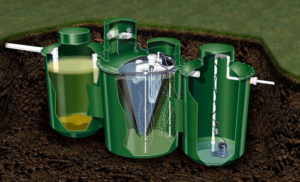
For the uninitiated, septic tanks are a holding or containing chamber. They contain all the wastewater that comes forth from a residential property. So, all the pipes in the property that carry outflowing water from the house, inevitably lead to the septic tank. These pipes carry the water from the toilets, showers, dishwashers, sinks and showers to a central pipeline. This pipeline pumps the wastewater into one end of the septic tank.


It follows that the wastewater entering the septic tank will contain all the liquid waste that comes from the house. So, once the wastewater enters the tank, gravitational forces begin to act on it. The solid waste material in the wastewater will invariably sink to the bottom. Similarly, water and greasy waste will float to the top. So, when new wastewater enters the septic tank, it will force the separated water out into the drain field. At this point, the drain field will serve to act as an additional filter. It will let the water and its nutrients percolate into the ground. At the same time, it will ensure that any sedimentary matter remains at ground level.


When people install septic systems, they will ensure that the system has adequate space for three main components. These comprise the home’s plumbing system, the septic tank and the drain field (or the soil treatment area). All three components will need to function properly at all times. Only then will the system be capable of treating and disposing of the wastewater effectively. This is why septic tank installers design these systems meticulously. Over time, homeowners will require septic pump outs in their Two Wells or Angle Vale properties. This is essential for ensuring that the septic system functions perfectly.


What Septic System Services Do Septic Tank Owners in Rural Areas Typically Require?


Nothing lasts forever. Neither will any object or system continue to work for indefinite spans of time. Similarly, it is worth highlighting that no septic system can work without proper maintenance. So, every few years or so, you will need to contact professionals for repairing, pumping out or cleaning the septic system. Some of the essential septic services that you will need over time include:


  • Septic Pumping Services: Septic desludging services are quite common in One Tree Hill, Ward Belt and the adjoining areas. When professionals pump out the septic system, they will eliminate the sludge that has accumulated within the system over time. This sludge will probably never make its way to the drain field. Hence, your septic tank will require regular desludging.
  • Septic Drain Cleaning Services: No one likes having clogged drains on their properties. Such drains will often lead to a wide range of problems. For instance, clogged drains in your bathrooms will mean that it could take ages for the water to flow out of the drains in your sinks and showers. At the same time, clogged drains could also affect the functioning of your septic system. In some cases, it could impede your system from processing wastewater properly. Regular cleaning of the drains could ensure that your drains remain clean and free from debris and other sediments.
  • Septic Repairing Services: With the passage of time, septic tanks might need some repairs. Professionals pay great attention when it comes to designing septic systems. Similarly, they are the ones who will be able to make your septic system functional once again. Consult them for repairing the tank in case you:
    • Notice your toilets and sinks experiencing frequent back-up issues
    • Come across soggy and wet areas near the drain field area on your property or,
    • Encounter a foul smell or odour near the septic tank


Consulting septic system professionals to inspect your septic tank regularly is worthwhile. Their observations could help you prevent the issue from exacerbating further. Their expertise might save you from spending lots of money for costly repairs in the future.


Nitschke Liquid Waste – The Leading Providers of Septic Cleaning Services in Williamstown and Lewiston


If you have a septic system on your property and need it repaired or cleaned, think of Nitschke Liquid Waste. A South Australian family owned and operated company, we specialise in disposing of liquid waste. It is worth mentioning that we have over 20 years of experience in the business. This enables us to offer premium-quality services at competitive prices. Unlike other companies, we offer reliable and cost-effective services. From cleaning your grease traps to pumping out septic tanks, our team can do it all. Not surprisingly, we are the liquid waste removal experts in South Australia. Whether you reside in Gawler or Two Wells, we can provide prompt and dependable services. Check out all our services here.

environment friendly liquid waste management
12th September, 2016

Make your Liquid Waste Practice Environmentally Friendly

Liquid waste has the potential to seriously harm the environment, soils, plants, animals and human health. As a business that handles liquid waste, it is your responsibility to ensure doesn’t threaten the surrounding environment. This might mean selecting the right liquid waste removalist or simply educating your employees on how to respond to a spill correctly.


Here are the steps to ensuring you are treating your liquid waste in an environmentally sustainable way.


Septic Pumping Angle Vale
28th June, 2016

What are Aerobic Systems?

Appearing in the last ten years, aerobic systems are a new technology to remove septic waste. Depending on the manufacturer, aerobic septic waste can come under a variety of different names, such as Biocycle, Eco cycle and Enviro cycle. Most of the tanks used for the system are 7500 litres in volume, and according to manufacturer guidelines need to be emptied every four years. The aerobic system is a smaller scale sewage treatment that is similar to the septic tank system, however uses an aerobic process for digestion rather than just the anaerobic process.

grease trap cleaning adelaide - nitschke liquid waste
4th May, 2016

Why your grease trap needs to be serviced

If you’re a food retailer, you probably have a grease trap on your premises that needs to be emptied regularly.


Because commercial kitchens in restaurants and shopping centres generate large volumes of liquid food waste, there are a few reasons that it’s important that your grease trap is operating properly all the time—and why it’s just as important to schedule regular servicing to maintain it in good working order.

Septic Pumping Redwood Park Adelaide
26th October, 2015

Tips for Cleaning and Maintaining Your Grease Traps

Washing up after a meal is not one of the most looked forward to activities in many households throughout South Australia. However, many people often forget that their kitchen sinks are useful for transporting the wash water to the drains, not scraps of rubbish. As such, it is hardly surprising that many people end up pouring waste cooking oil down the drain. Or, they could even scrape the waste off their plates into the sink. This practice could be quite costly over time.

Septic Tank Pumping St Agnes
3rd September, 2015

Prevent Septic Pump-Outs with Regular Septic Tank Treatment

The South Australia Water Authority (or SA Water) is responsible for collecting and treating wastewater in the larger towns of South Australia, such as Adelaide. But many small townships abound throughout the state of South Australia. These townships cannot reap the benefits of availing the services offered to major towns by SA Water. So, the local councils in these townships bear the responsibility of managing the wastewater generated in these townships. They typically achieve this via Septic Tank Effluent Disposal Schemes (STEDS).

save $20 on your next grease trap service voucher
save $20 on your next septic tank cleaning

SAVE

$20

ON YOUR NEXT SEPTIC TANK CLEAN